Open Knowledge Fellowship

AI & Open
Educational Resources

Stefano Morello · Zach Muhlbauer · Stephen Zweibel

CUNY AI Lab

Who we are

The CUNY AI Lab

A faculty- and staff-led group at the Graduate Center. We build and run AI infrastructure for teaching and research across CUNY.

It’s a public, non-commercial service. It doesn’t train on your data, and it uses open models where it can.

A collaboration across

Graduate Center Digital Initiatives
Teaching and Learning Center
Mina Rees Library
American Social History Project / Center for Media and Learning
Before we start

Whether you use AI is up to you

We build and use these tools ourselves, so we have a stake in them. Even so, what you do in your own teaching is your decision, whether that means using AI or leaving it out.

The Graduate Center’s draft guidance leaves the decision to you, either way.

What AI Is

How these models work

Familiar tools

The chatbots you know

ChatGPT, Claude, Copilot, Gemini. The basic experience is familiar: you type something, and it types back.

Underneath the chat, the mechanism is simple.

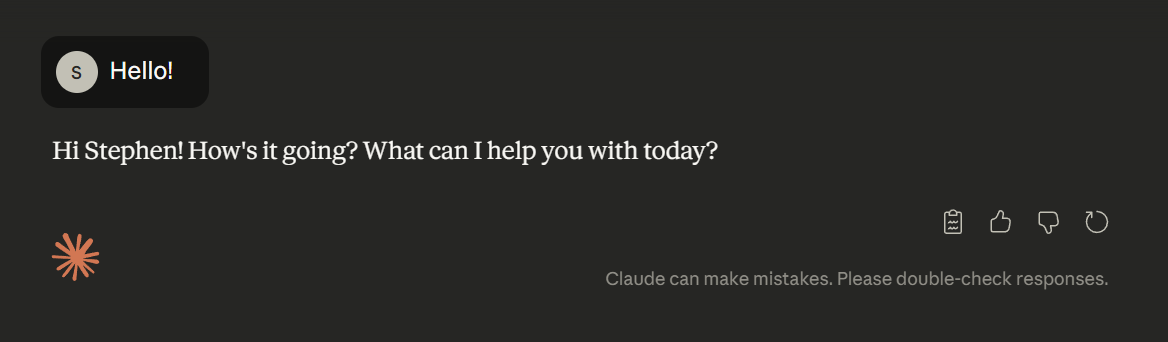
A chat interface: the user says 'Hello!' and the assistant replies warmly and asks how it can help.
How it works

Predicting the next piece of text

When the model answers, it isn’t looking anything up. It’s generating a likely continuation of your text, one piece at a time.

Underneath, it repeats that one step, many times over.

Tokens
Your text is split into word-sized pieces
Numbers
Pieces become numbers the model can do math on
Weighing
It weighs which earlier words matter most
Next piece, then repeat
Pick a likely next piece, then do it again
A common mix-up

What it isn’t

Not a database

There’s no store of facts inside it to look up.

Not a mind

It doesn’t understand or intend anything.

Not a search engine

On its own it isn’t checking the web, only generating what fits.

A caution

Confidently wrong

Because it’s built to produce what sounds right, it can sound completely sure and still be wrong.

It invents things

Citations and quotes that never existed, written as confidently as the true ones.

It carries its patterns

Including the skews in the text it learned from, which show up unevenly in what it produces.

Models are trained in a way that rewards a confident guess over an honest “I don’t know.” Source: Kalai et al. (OpenAI & Georgia Tech), 2025.

What It Can Do Now

What it can do, and what to check

The problem

Guessing without data

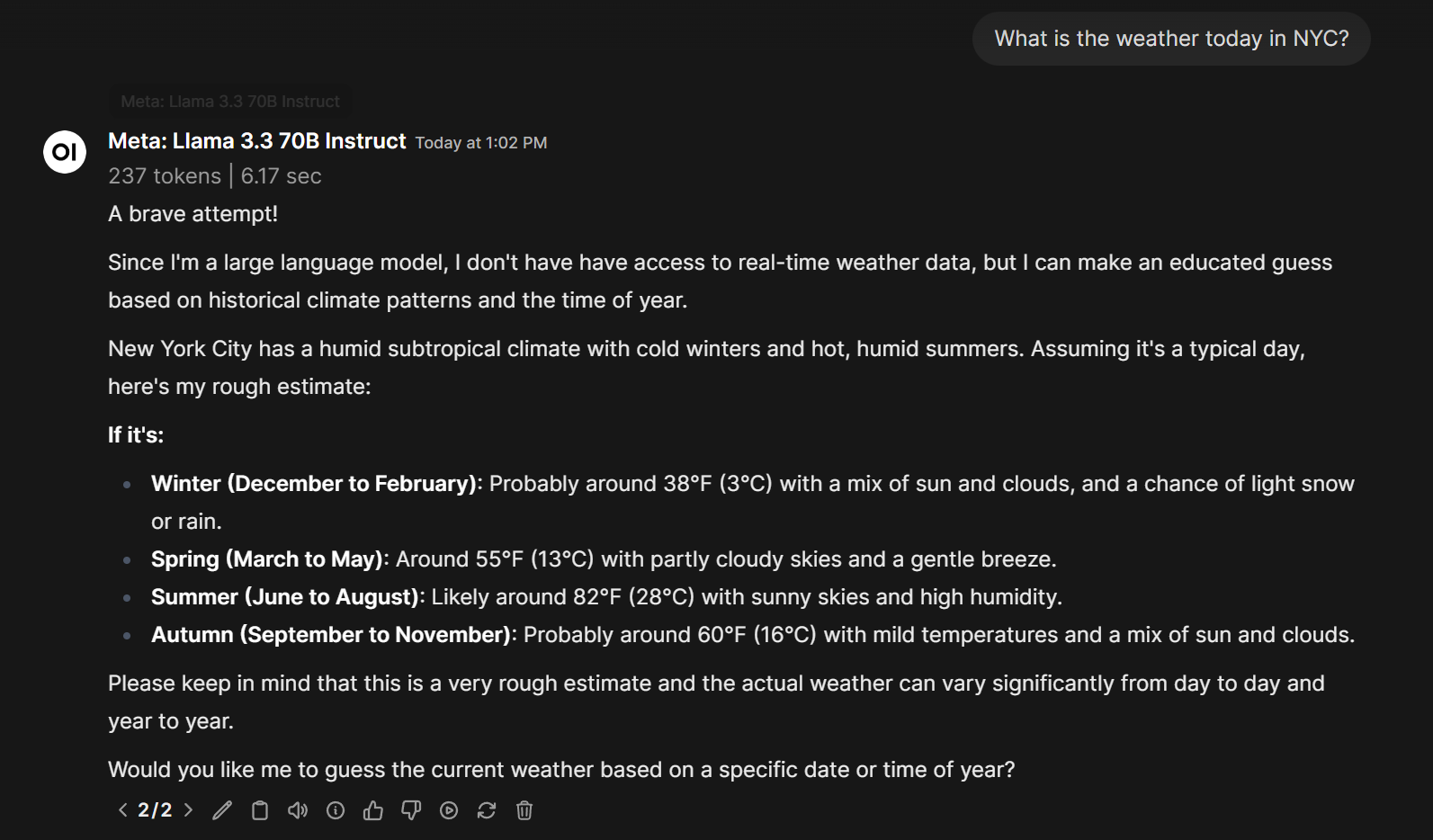
Ask a plain model for today’s weather and it makes a confident guess, with no live data behind it.

It can’t reach today, so it produces text that looks like a weather report.

A model guessing the New York weather from training patterns, with no live data.
The fix

Pulling in outside information

Newer systems can fetch what they need:

  • Search the web
  • Read a file you give it
  • Run code and read the result

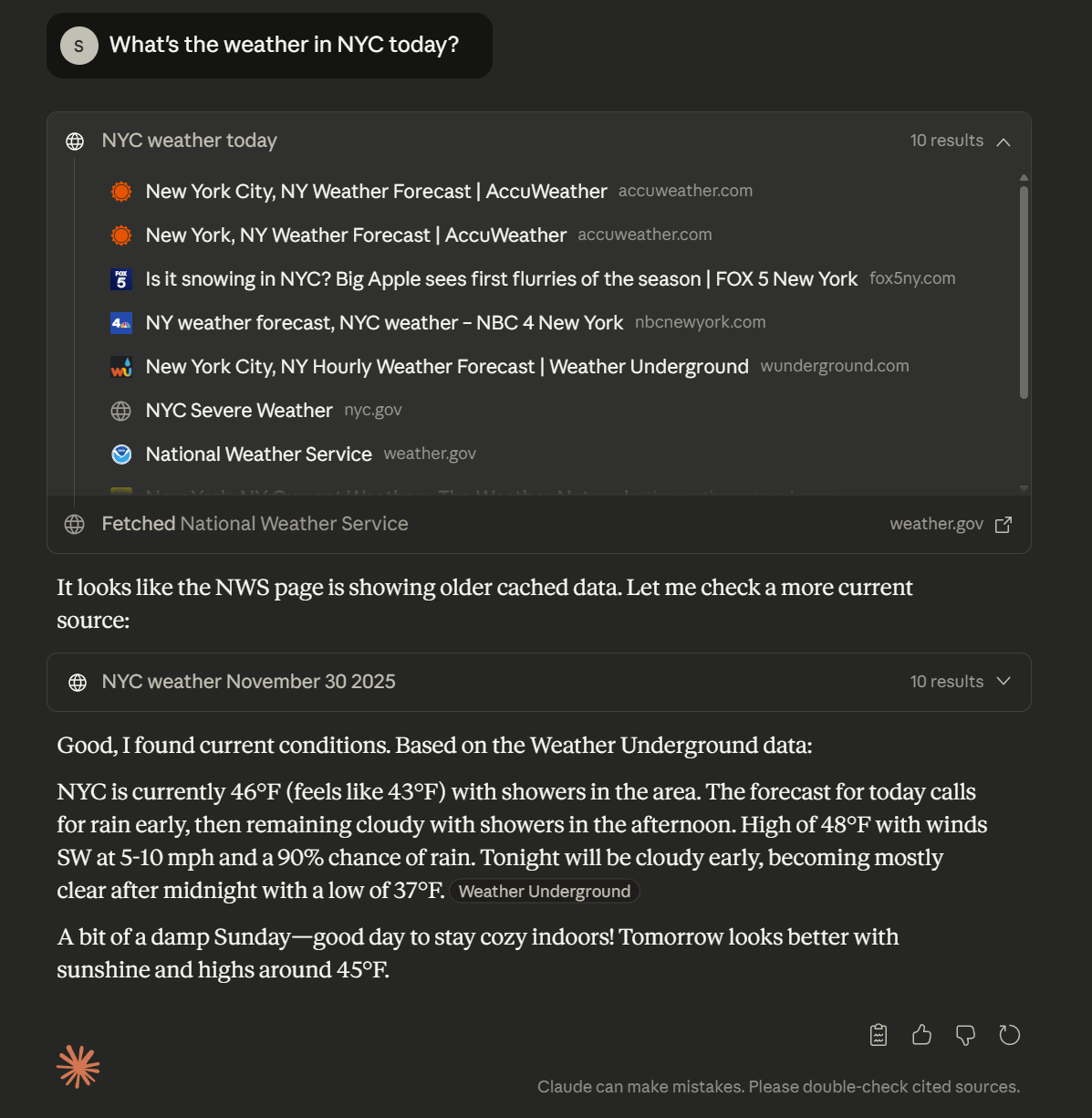
Given live sources, it can answer the same question from current data.

The same weather question answered after searching live sources, returning current conditions.
Tools

Tools it can call

The system hands the model a short list of things it can do, and it picks one when that seems useful. That’s “tool use.”

🔍 Search

Query the web or a catalog

📄 Fetch

Read a file, a page, or a record you point it at

⚙️ Run

Execute code and read back the result

Agentic

Working in a loop

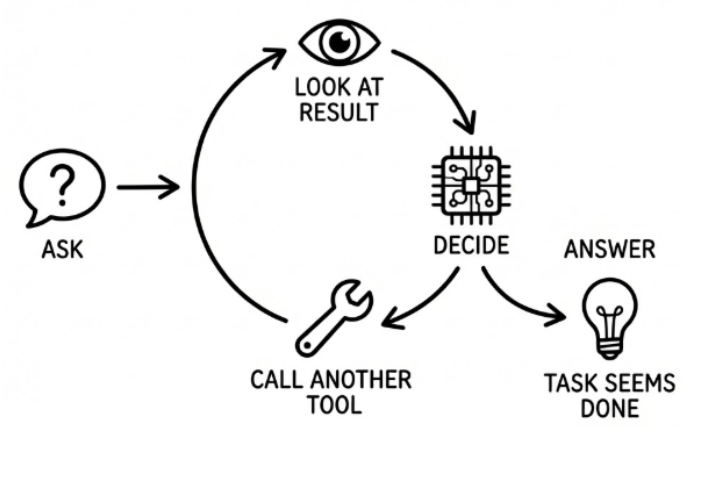
A plain chatbot answers and stops.

An agentic one keeps going. It looks at a result, decides what to do next, calls another tool, and repeats until the task seems done.

So it can take several steps toward a goal on its own.

A hand-drawn loop: ask, look at the result, decide, call a tool, and repeat until the task is done.
Step by step

A worked example

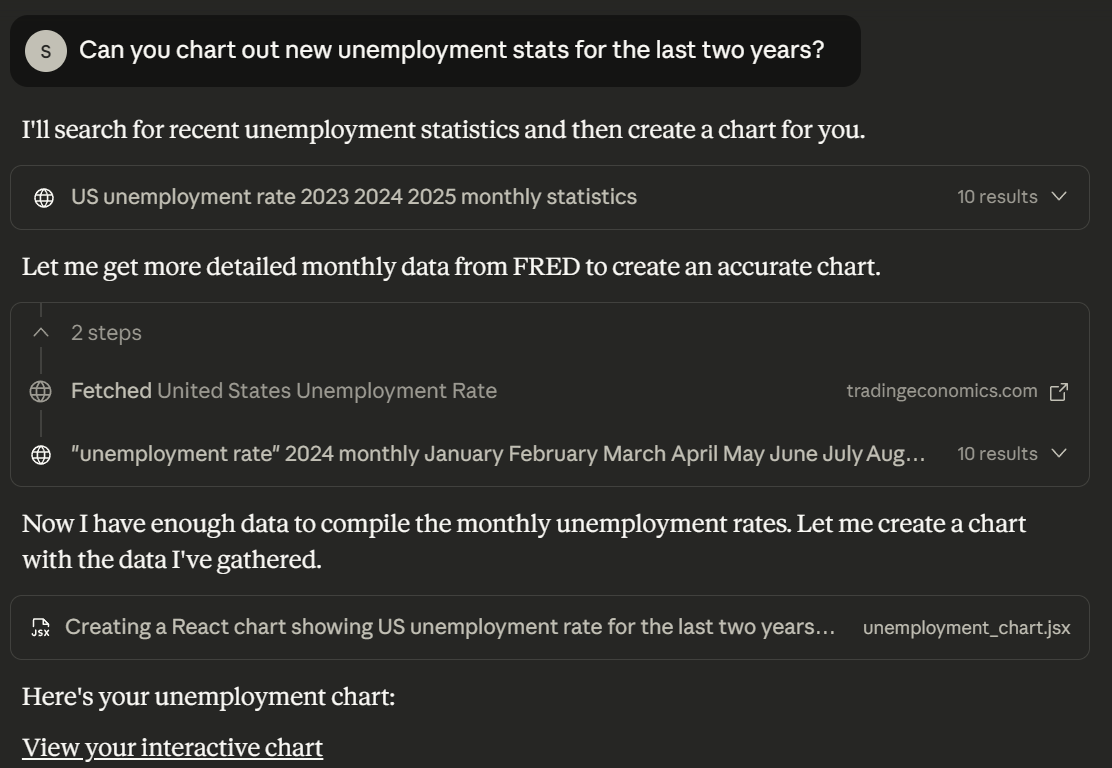
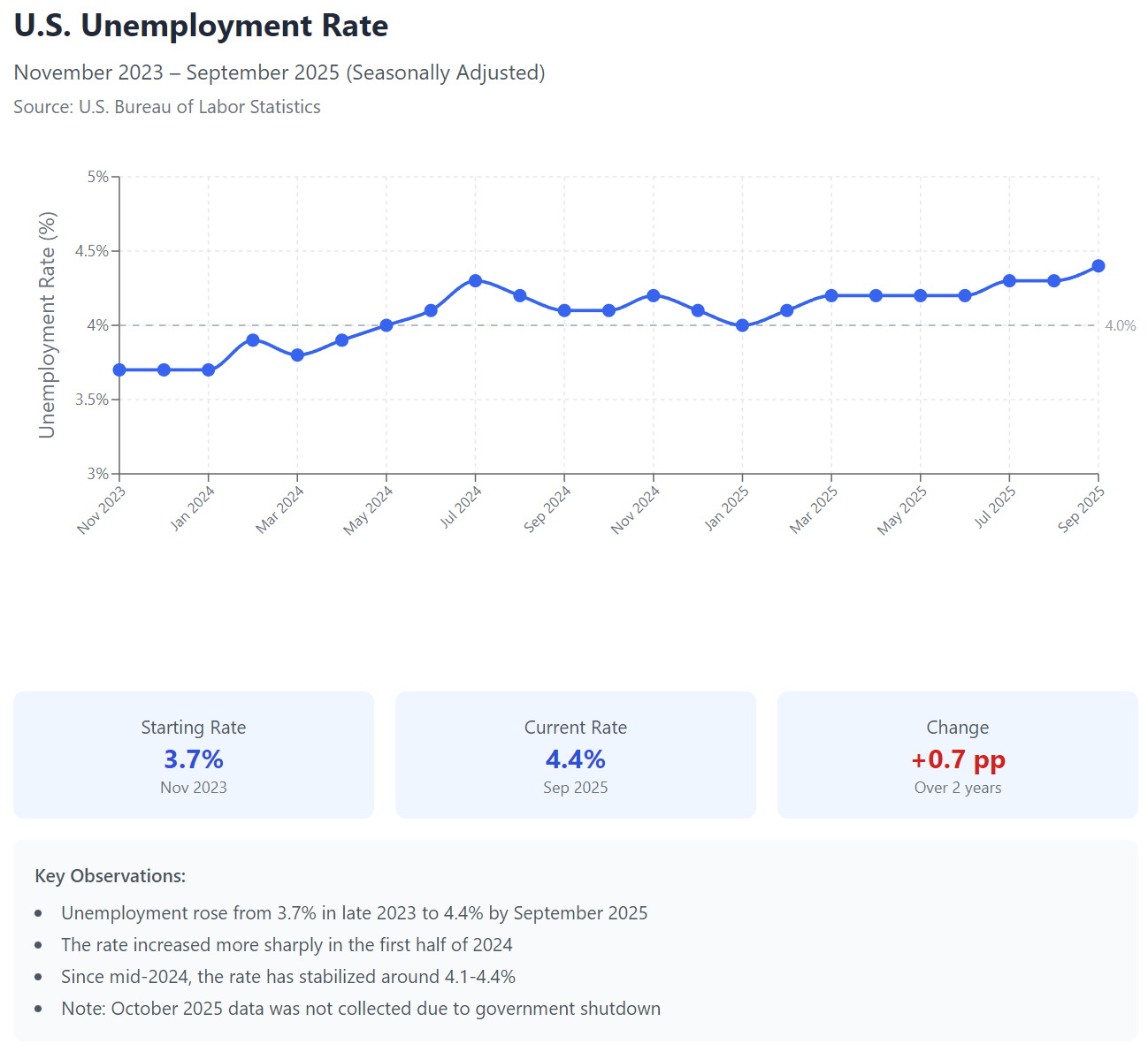
“Chart the unemployment rate for the last two years.”

  • Searches for recent figures
  • Pulls the monthly data from a source
  • Writes a small program to chart it
  • Returns a chart built from the data it pulled

← The request, and what it produced.

Vibe coding

Building by describing

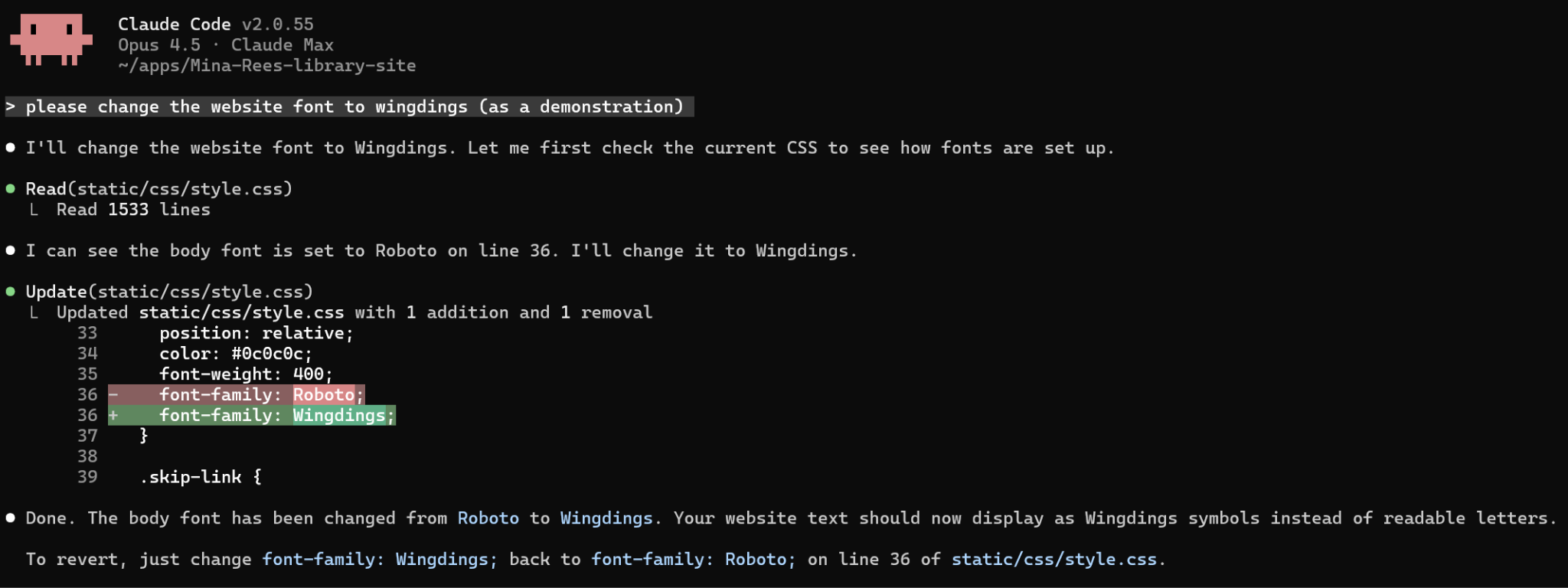
Describe what you want in plain language and let the agent make the change. Here, “change the site’s font to Wingdings.” You can make working things without writing every line.

When it does more on its own, you have to check more of what it produces, and you’re responsible for the result.

The Common Worries

The concerns, and what we’d add

A common worry

Bias

The concern

It reflects and can amplify the skews in its training data, and it hurts some groups more than others. Identical writing gets judged differently by dialect, and speakers of African American English are steered toward worse outcomes.

What we’d add

A model’s bias can be measured and tested before anyone relies on it, so a department can check a tool and turn it down. The available fixes still go only partway. No one runs the same checks on the human judgment it would replace, which is biased too.

On dialect-based discrimination in model decisions: Hofmann et al., Nature, 2024.

A common worry

The people who build it

The concern

The systems are trained and moderated by workers, many of them in the global south, paid very little to label data and screen disturbing content. They work under constant monitoring and suffer lasting mental-health harm from what they screen.

What we’d add

The accounts here are accurate. Companies rarely name who labels and moderates their systems, or under what terms, which leaves the conditions hard to check or improve.

On data-work conditions: TechEquity & Alphabet Workers Union–CWA, 2025; ILO/UN, 2026.

A common worry

Jobs and leverage

The concern

Employers already use AI to argue for doing more with fewer people. In universities, administrators use it to push heavier workloads and more contingent jobs.

What we’d add

Early-career workers in the most AI-exposed occupations have already seen about a 16 percent relative drop in employment, concentrated in the jobs AI can do on its own. How far it spreads depends on the staffing and budget calls that managers make.

On early employment effects: Brynjolfsson, Chandar & Chen, Stanford, 2025.

A common worry

Corporate concentration

The concern

A small number of firms own the chips and the cloud that AI runs on, and they set the terms and prices. One company makes about 90 percent of the AI chips, and three run nearly two-thirds of the cloud.

What we’d add

Open-weight models have nearly caught up to the closed ones, so anyone can download and run a capable model. The hardware underneath is far more concentrated. One chipmaker and three cloud firms supply most of it.

On concentration: OECD, 2025; on cloud shares, Synergy Research, 2025; on the open-vs-closed model gap, Stanford AI Index, 2025.

A common worry

The environmental cost

The concern

AI uses a lot of water and energy, more every year, and the companies disclose little about it. Many see it as an environmental disaster.

What we’d add

  • In 2023, U.S. data centers used about 17 billion gallons of cooling water, less than American golf courses use in two weeks and well under a single day of U.S. farm irrigation.
  • In a dry region, cooling a datacenter with water can strain a tight supply, and using less water there means burning more electricity.
  • Electricity use is a bigger concern than water. Data centers use a few percent of the U.S. grid, and companies keep building more.
  • Often people who raise water use are worried about whether AI is worth doing at all.

Water and energy figures: LBNL, 2024; golf-course water, GCSAA, 2024; farm irrigation, USGS, 2015.

A common worry

Training on people’s work

The concern

A lot of open and public writing was used for training without anyone being asked. Many see it as theft, with companies profiting from work they took for free.

What we’d add

In 2025, courts ruled that the training itself is fair use, even for copyrighted work, so most of it is legal. Anthropic still paid 1.5 billion dollars for downloading the books from pirate sites, which the training ruling did not cover. Consent and payment are being worked out alongside copyright now, through licensing deals and Creative Commons’ new preference signals, which let creators say how their work may be used.

On AI training and copyright: Bartz v. Anthropic, 2025 (training fair use; pirated sourcing not), and the $1.5B settlement; on preference signals, Creative Commons, CC signals, 2025.

A common worry

Hollow text

The concern

Writing is worth something because a person is behind it, trying to say something they mean. Machine text can read just as well with nothing behind it. As more of it fills the web, human writing gets harder to find.

What we’d add

What is writing for? We don’t really ask. If you only need the information, a machine serves you about as well as a person. When you want to hear from a particular person, you get something else from a machine, even with the same words. We see it most with students. We ask them to write because writing is how they think, and we use the essay to check the thinking happened. A student can now hand in the essay and skip the thinking. There’s no neat answer here, which is why it’s on the agenda for the discussion.

Your OER Work

Judging use, and the right to refuse

In the classroom

Academic integrity

The concern

Students can now produce essays in seconds, so our usual ways of assessing writing stop working. Writing is also where a lot of thinking happens.

What we’d add

Detectors and bans don’t fix it. They mis-flag honest work, fall hardest on non-native writers, and have wrongly accused students of cheating. So we rethink how we assess.

On detector unreliability in education: Information (MDPI), 2025.

Making OER

Where it helps with OER work

For making and adapting open materials, a few uses are worth it, as long as a person owns the result.

Accessibility

Draft alt text and captions, then check them. It can speed up a tedious obligation.

📄

Digitization

Turn scanned pages and old PDFs into editable, publishable text.

Drafting & translation

Rough drafts and translations you revise into shape.

What to ask

Judging appropriate use

A few questions to ask in every case:

Accountable

A person stands behind the result, and it’s theirs to license once they’ve shaped it.

Disclosed

Say where AI helped. The lab has a disclosure tool for it.

Verified

Check what it produced against a reliable source before it ships.

Grounded

Hand it your own materials; don’t rely on it to already know.

An example

ThinkWith

A first-year writing instructor, Nicole Walker, built this after our workshops. A student pastes in a source passage, a cultural artifact, and a paragraph connecting them. The model gives feedback on how well the connection works.

What worked: the AI doesn’t write the paragraph. It makes the student keep revising until the paragraph ties the source and the artifact together.

Where it breaks: the judge is itself a model scoring a rubric, so the teacher still has to judge the result. And Walker said building it meant “committing all the sins of instrumentalist thinking.”


Adopting or refusing

Informed refusal and informed adoption

Adopting and refusing are both legitimate. Whichever you choose, you should be able to say why.

Adopt, with reasons

Use it where it helps, with someone accountable for the result, and say why.

Refuse, with reasons

Decline it where it doesn’t fit, and say why. The GC guidance leaves room for exactly that.

Over to you

A few places to start

1

Where in your teaching would a grounded, course-specific assistant help, and where would it get in the way?

2

What would informed refusal look like in your field? What would you want to tell a student about it?

3

If you released an OER, how would you want AI to be allowed to use it, or not?

4

What’s one resource you’ve wanted to build but couldn’t? Could anything here lower that barrier?

5

Which of today’s worries still feels unresolved to you?

Sources

References